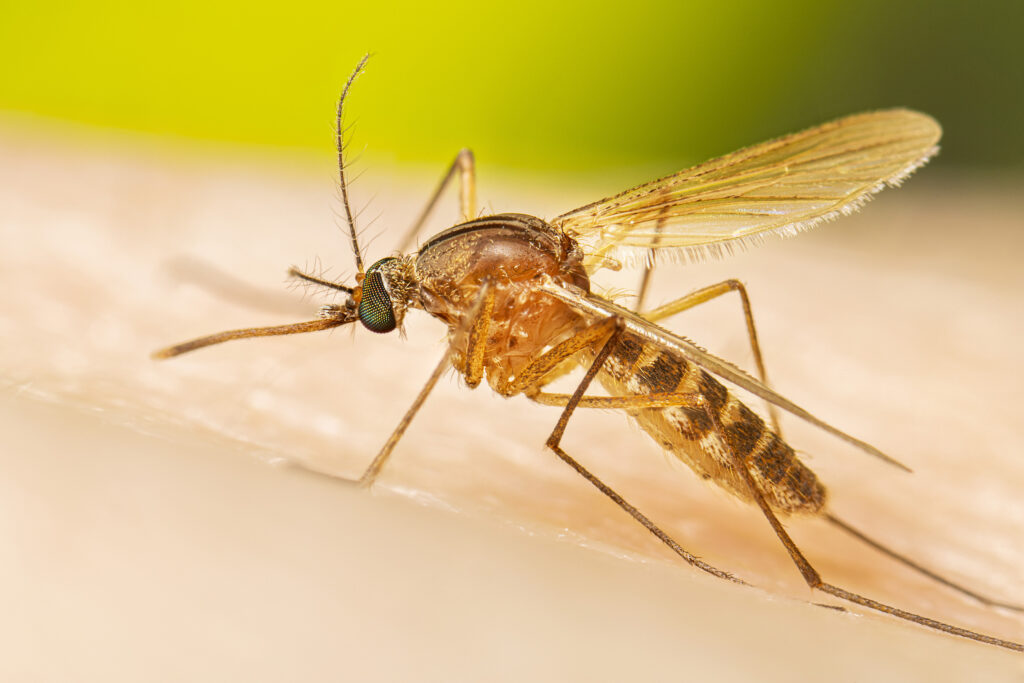
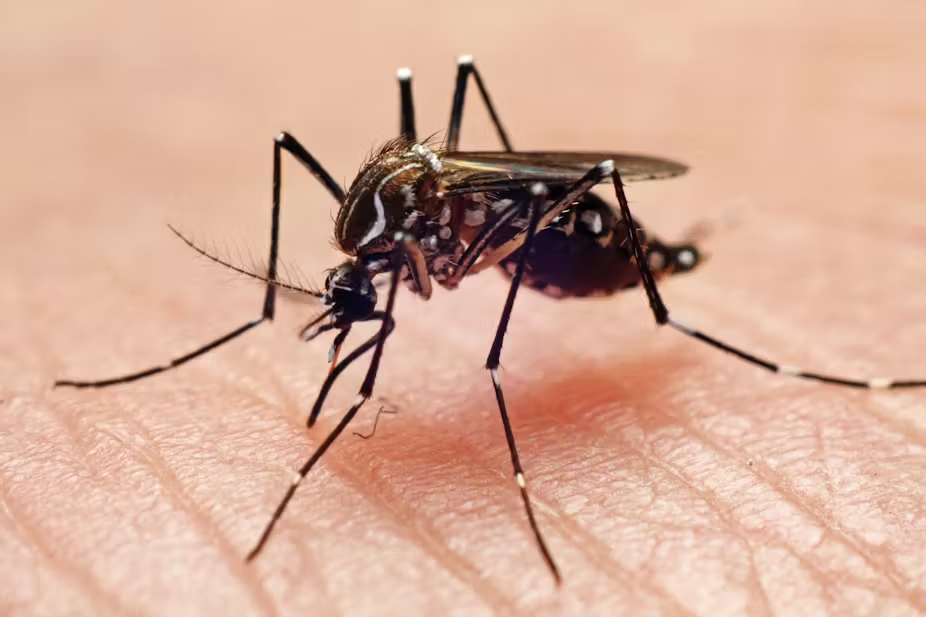
Mosquitoes belong to the family of nematocerid flies and undergo a four-stage life cycle: egg, larva, pupa, and adult. The first three stages occur in water, making stagnant water sources a primary breeding ground. Once they reach adulthood, mosquitoes become airborne, seeking hosts for blood meals to reproduce.
Common Types of Mosquitoes & Associated Diseases
In the Bay Area, four primary groups of mosquitoes are commonly found, each known to transmit different diseases:
Aedes Mosquitoes – These mosquitoes are known carriers of Dengue, Zika Virus, and Chikungunya. They breed in small water collections, such as containers, tires, and flower pots, and are active during the day.
Anopheles Mosquitoes – The primary vector of Malaria, they breed in clean, stagnant water and are most active during dusk and dawn.
Culex Mosquitoes – These mosquitoes are responsible for spreading West Nile Virus and Japanese Encephalitis. They typically breed in polluted water and prefer to bite during nighttime.
Culiseta Mosquitoes – Less commonly associated with human diseases, but some species may transmit Western Equine Encephalitis. They primarily breed in marshy areas and prefer feeding on birds and large mammals.
Treatment & Prevention Options
Effective mosquito control involves a combination of preventive measures and treatment strategies:
Eliminating Breeding Sites – Removing standing water from containers, clogged drains, and outdoor areas to prevent mosquito larvae from developing.
Larvicidal Treatments – Using biological or chemical larvicides in water bodies to prevent mosquito larvae from maturing into adults.
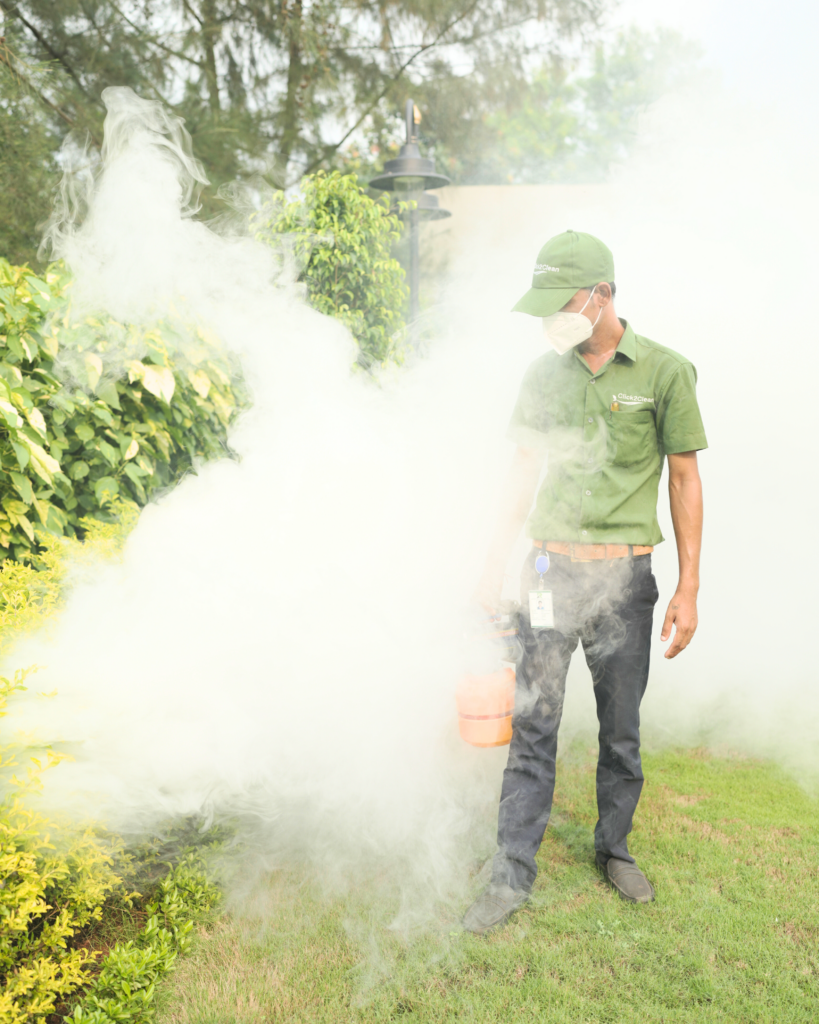
Fogging & Residual Sprays – Applying insecticides in high-risk areas to reduce adult mosquito populations.
Mosquito Nets & Repellents – Using bed nets, mosquito coils, and insect repellents containing DEET or picaridin to prevent bites.
Biological Control – Introducing natural predators like mosquito-eating fish or bacteria (e.g., Bacillus thuringiensis) to control mosquito larvae in water sources.
Combining these approaches helps reduce the risk of mosquito-borne diseases and keeps the environment safer.
Mosquito Management Service
Our technology is a process of achieving sustainable mosquito control in an
ecofriendly manner by treating the breeding grounds where Mosquitoes like by utilizing appropriate pesticides.